Local SEO for Builders That Wins Nearby Work
A homeowner searching “builder near me” at 8pm is not looking for a clever marketing message. They want to see a credible local firm, evidence of similar work, clear contact details and a straightforward way to request a quote. Local SEO for builders puts your business in front of that buyer at the point they are ready to act.
For most building firms, winning local visibility is not about chasing broad national rankings. It is about being the obvious, trustworthy choice in the towns, boroughs and postcodes where you can price work competitively and deliver it well. A strong local presence supports a more consistent flow of relevant enquiries, rather than enquiries from areas you do not serve.
Why local search matters for building firms
Construction work is usually bought on trust, proximity and proof. A client may compare three firms, but they are likely to contact the one that looks established, works locally and shows completed projects similar to their own. Google is trying to give them those useful local results.
When someone searches for a loft conversion builder in Leeds, a house extension company in Birmingham or a commercial contractor in London, Google considers relevance, prominence and location. Your services must match the search, your business needs signals that show it is genuine and well regarded, and your stated service area must make practical sense.
This is why an attractive website alone is not enough. It needs clear service pages, location relevance, fast mobile performance and visible proof of workmanship. Your Google Business Profile, reviews and business details across trusted directories also need to support the same picture.
Local SEO for builders starts with a clear local offer
Trying to rank for every construction term across the whole UK usually spreads a smaller firm too thin. Start by defining the work you want, the areas you can serve profitably and the clients you are best placed to win.
A general builder might focus on extensions, renovations, loft conversions and structural alterations across a defined radius. A specialist contractor may concentrate on roofing, groundwork, fit-outs or fire safety work in selected towns. The right approach depends on your capacity, travel costs, project values and existing reputation.
Set up your Google Business Profile properly
Your Google Business Profile is often the first thing a local prospect sees. It should show your real business name, correct primary category, telephone number, opening hours, website address and a precise description of your services. If clients visit your premises, use the genuine address. If you travel to clients, set your service area accurately instead.
Add current photographs of completed work, branded vehicles where appropriate, team members and before-and-after projects. These images should demonstrate the type and standard of work you want more of. A profile filled with generic stock images gives prospects little reason to trust you.
Keep it active. Answer questions, respond professionally to reviews and update photographs as projects are completed. Do not create duplicate profiles for nearby towns or use virtual offices simply to appear more local. These shortcuts can undermine trust and create problems with profile verification.
Make your website useful for local clients
Your website should make it easy for visitors to understand where you work and what you do. Include your core service areas naturally on relevant pages, in the footer and on your contact page. Display a consistent phone number and business details throughout the site.
Each main service deserves its own well-written page. An extension page should explain the type of extensions you build, your process, planning considerations where relevant, typical project scope and how to request a survey or quote. It should not be a thin page with a town name swapped in fifty times.
Location pages can work well when they offer real value. A page for builders in Manchester, for example, may include local project examples, areas served, the services available there and practical information about arranging a site visit. If you have no work, team presence or genuine operational reason to target a location, a page is unlikely to persuade either Google or a prospective client.
Use completed projects as local proof
A project portfolio is one of the strongest assets a builder can have. It turns broad claims about quality into tangible evidence. It also gives your website fresh, locally relevant content that competitors often neglect.
For each worthwhile project, create a concise case study. State the location at town or borough level, the client brief, the work completed, key challenges and the finished result. Include high-quality photographs taken at different stages where permission allows. Mention practical details that matter to buyers, such as structural work, insulation upgrades, drainage, kitchen fitting or coordination with building control.
This content helps a potential client picture your firm delivering their project. It can also support searches for specific services in specific areas without forced keyword repetition. A well-documented rear extension in Solihull is more convincing than a page that merely repeats “builders Solihull” throughout the text.
Accreditations, insurance details, safety certifications and trade memberships should also be visible where relevant. They may not directly transform rankings, but they help remove hesitation when a visitor reaches your site from a local search result.
Build reviews and local references honestly
Reviews influence how often people choose to contact a business after finding it. They also provide a regular stream of authentic language about your services, workmanship and customer experience.
Ask for a review once a project has reached a positive handover point. Make the request personal and simple. A homeowner may mention the extension, their location, communication or tidiness without you scripting their wording. That detail is valuable because it reflects a real experience.
Respond to every review with courtesy, including the occasional critical one. A calm response that addresses a concern professionally can reassure future clients more than a perfect-looking review score. Never buy reviews, offer incentives for positive ratings or ask staff and friends to post false feedback.
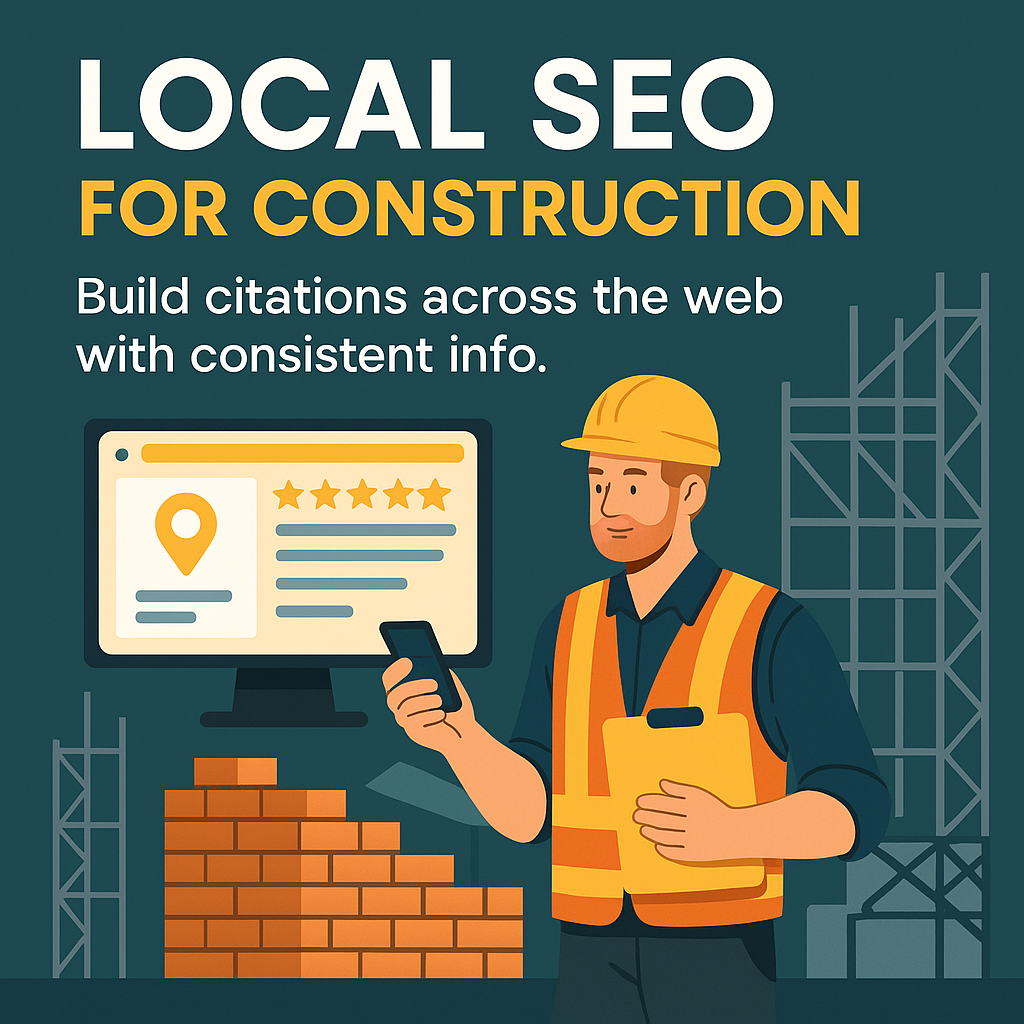
Your business name, address and phone number should be consistent wherever your firm is listed. Relevant trade directories, local business listings, supplier partnerships and community sponsorships can all reinforce your local presence when they reflect real business activity. Quality matters more than submitting your details to hundreds of low-value directories.
Get the technical foundations right
A local prospect is often browsing on a phone between meetings, on a lunch break or while standing in a property they intend to improve. If your site is slow, difficult to use or hides the contact route, good rankings will not produce the enquiries they should.
Use a mobile-first layout with prominent calls to action such as “Request a quote”, “Arrange a site visit” or “Call our team”. Keep forms short enough to complete easily, while collecting the details needed to qualify a lead: project type, location, estimated timing and contact information.
Make sure key pages are indexable, secure and free from broken links. Compress project images without losing the detail needed to show workmanship. Use clear page titles and headings that describe the service and area naturally. Structured business information can help search engines understand your company details, but it is not a substitute for useful pages and real local evidence.
Measure enquiries, not just rankings
A first-page position is encouraging, but it is not the final measure of success. Track phone calls, form submissions, quote requests and the source of leads. Then consider which enquiries turn into profitable work.
You may find that a page ranking slightly lower for a specialist service produces better leads than a broad page ranking highly for “builder”. That is a good outcome. Local SEO should support the type of work your business wants to take on, not simply increase website traffic.
Review performance monthly. Look for service pages with visits but few enquiries, locations where demand is growing, and project types that generate high-value work. Update pages with new case studies, photographs, testimonials and practical information rather than leaving them unchanged for years.
When professional support makes sense
Builders are busy running sites, managing trades, pricing jobs and dealing with clients. It is reasonable to handle basic profile updates in-house, but sustained local SEO needs consistent website improvements, content planning and performance tracking.
Construction Web Design UK can combine those foundations with a website built around the way construction clients make decisions: clear services, completed work, accreditations, testimonials and prominent enquiry routes. The aim is not to add marketing noise. It is to create a local digital presence that gives the right client confidence to get in touch.
Start with the next completed job. Photograph it properly, record what your team solved, ask the client for an honest review and publish the evidence where local prospects can find it. Small, consistent actions like these build the credibility that nearby clients look for before they pick up the phone.